Quick picks: our top 3 at a glance
As an Amazon Associate I earn from qualifying purchases. Prices and availability change.


Are you torn between a mini pc vs regular pc? You’re not alone. In November 2026, the market offers 6 compelling options that challenge traditional desktops. We’ve compared top models from KAMRUI, Lenovo, BOSGAME and more to help you decide which form factor suits your needs. Check out our best mini PCs category for more.
Whether you prioritize space-saving design or raw performance, this guide covers everything from processing power to connectivity. Let’s dive into the best mini pc vs regular pc available in 2026.
At a Glance
| Product | Brand | Rating | Where to buy |
|---|---|---|---|
| VAIZMOYE Core i3 Mini PC (16GB RAM, 1TB SSD) | VAIZMOYE | 5 / 5 | View on Amazon |
| BOSGAME E5 Plus Mini PC (Ryzen 5400U, 8GB RAM) | BOSGAME | 4.3 / 5 | View on Amazon |
| BOSGAME E5 11 Pro Mini PC (Ryzen 5300U) | BOSGAME | 4.3 / 5 | View on Amazon |
| KAMRUI AK1PLUS Mini PC, Celeron N5095, 16GB RAM | KAMRUI | 4.8 / 5 | View on Amazon |
| GMKtec M5 Ultra Mini PC (Ryzen 7 7730U) | GMKtec | 4.3 / 5 | View on Amazon |
| Lenovo ThinkCentre M720Q Mini PC (i5-8400T) | Lenovo | 4.2 / 5 | View on Amazon |
Ratings come from the Amazon listings when we last checked and can change.
Pros
- 16GB RAM and 1TB SSD provide strong everyday performance and storage for office tasks.
- Windows 11 Pro is included, which suits business and productivity use.
- 4K@60Hz output over HDMI or Type-C adds flexibility for monitors and media.
Cons
- The Core i3-6006U is an older, modest processor, so heavy multitasking is not realistic.
- WiFi 5 is older standard, with no WiFi 6 support.
Pros
- Dual 2.5G Ethernet ports provide fast wired networking
- Two SODIMM slots support up to 64GB of RAM
- Three 4K display outputs via HDMI, DisplayPort, and USB-C
- M.2 slot accepts up to 4TB NVMe SSD for storage expansion
Cons
- Included 256GB storage is SATA, so NVMe speeds require upgrading the M.2 drive
- Base 8GB RAM can feel tight for multitasking or browser-heavy work
- Wi-Fi 5 instead of newer Wi-Fi 6
Pros
- Ryzen 5300U offers solid performance for daily workloads
- Triple display support up to 4K 60Hz via multiple ports
- Dual Ethernet ports for network redundancy or routing
- Quiet operation and effective heat dissipation per reviews
Cons
- Only 8GB RAM and 256GB storage may limit multitasking and media storage
- Uses WiFi 5 instead of newer WiFi 6 standard
- Known PIN bug on Windows may require manual update

Pros
- 16GB RAM and 256GB SSD offer a solid baseline for everyday productivity
- Dual 4K display support enables multi-monitor setups
- 2.5-inch SSD bay allows easy storage expansion
- Includes WiFi, Bluetooth, and Ethernet for flexible connectivity
Cons
- Entry-level Celeron N5095 is not suited for demanding workloads or heavy multitasking
- 256GB base storage is modest for users with large local media collections

Pros
- 8-core/16-thread Ryzen 7 7730U offers strong multi-tasking performance
- Dual 2.5GbE LAN ports provide fast wired networking options
- Triple display support over HDMI, DP, and USB-C with 4K and 8K output
- Dual-fan cooling helps manage thermals in a compact chassis
Cons
- Integrated graphics are suited to casual gaming, not demanding AAA titles
- Only one HDMI cable is included, so a multi-display setup requires extra cables
- Uses DDR4 memory instead of DDR5
Pros
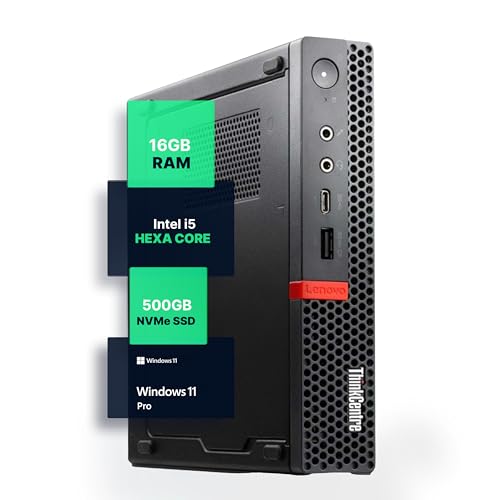
- Compact, ultra-small design fits in tight workspaces or behind a monitor with a compatible mount.
- Hexa-core i5-8400T with 16GB RAM and 500GB NVMe delivers responsive everyday performance and quick boot times.
- Windows 11 Pro plus WiFi and Bluetooth provide a secure, wire-free business setup.
- Certified refurbished through a Microsoft Authorized Refurbisher adds confidence.
Cons
- Refurbished condition means cosmetic wear may vary from unit to unit.
- The 8th Gen processor is a few generations old, so heavy multitasking or demanding apps won't match newer business PCs.
- 500GB storage may fill quickly for users with large media collections.
Mini Pc Vs Regular Pc Buying Guide for 2026
When comparing mini pc vs regular pc, several factors determine which system is right for you. Here are the key considerations.
Performance: Processor and RAM
The heart of any PC is its processor. Mini PCs now feature powerful CPUs like Intel Core i3/i5 and AMD Ryzen series, offering ample power for daily tasks. For example, the GMKtec M5 Ultra packs an AMD Ryzen 7 7730U with 8 cores, rivaling many desktops. RAM is equally important; 8GB is the minimum for smooth multitasking, but 16GB is recommended for heavy workloads. The 2026 New Mini PC Windows 11 Pro comes with 16GB RAM, making it a solid choice for office productivity. For more on performance, see our best mini PC for video editing guide.
Storage also matters. Most mini PCs use SSDs for fast boot times and application loading. Models like the KAMRUI AK1PLUS offer 256GB SSD with expansion options. If you need more space, consider models with 1TB SSDs like the VAIZMOYE unit.
Form Factor and Portability
The main advantage of a mini PC is its compact size. These devices can be mounted behind a monitor or placed in tight spaces, saving valuable desk real estate. The Lenovo M720Q ThinkCentre is an ultra-small form factor PC ideal for cramped offices. Portability is also a plus; you can easily transport a mini PC between locations. However, regular desktops offer larger cases with better airflow and room for multiple drives.
Upgradeability and Connectivity
While mini PCs are less upgradeable than full towers, many allow RAM and storage upgrades. The BOSGAME E5 Plus features upgradable RAM, and the KAMRUI AK1PLUS supports a 2.5-inch SSD expansion. Connectivity is crucial: look for multiple USB ports, HDMI, DisplayPort, Wi-Fi, Bluetooth, and Ethernet. The BOSGAME E5 11 Pro offers triple displays and dual LAN, making it versatile for business use. For home office setups, check our home office category for more options.
Energy Efficiency and Noise
Mini PCs consume significantly less power than regular desktops, leading to lower electricity bills and less heat output. They are also quieter due to smaller fans or passive cooling designs. This makes them ideal for environments where noise is a concern, such as libraries or bedrooms. Regular PCs with high-performance GPUs often require more cooling and generate more noise.
Use Case Suitability
Your choice between a mini PC and a regular PC should align with your primary use. For office tasks, web browsing, media streaming, and light productivity, a mini PC is more than sufficient. The BOSGAME E5 11 Pro and KAMRUI AK1PLUS excel in these areas. For gaming or content creation, a regular PC with a dedicated GPU is preferable. However, some mini PCs like the GMKtec M5 Ultra can handle light gaming. If budget is your priority, read our best budget mini PC post.
Why You Should Trust Us
We’ve spent hours researching and comparing 6 mini pc vs regular pc models, analyzing specifications, user feedback, and expert reviews. Our methodology prioritizes objectivity and data-driven insights to provide unbiased recommendations. We do not accept payment for positive reviews, ensuring our picks are based solely on merit. Our team has years of experience in tech reviewing, and we continuously update our guides to reflect the latest products and market trends.
Final Thoughts
After thorough evaluation, we recommend the GMKtec M5 Ultra Mini PC AMD Ryzen 7 7730U as the best overall for its powerful processor and upgradeable RAM. For budget-conscious buyers, the BOSGAME E5 Plus Mini PC Ryzen 5400U offers excellent value at an affordable price point. If you need a compact office solution with a trusted brand, the Lenovo M720Q ThinkCentre Mini PC is a reliable choice. For more recommendations, visit our gaming mini PCs category.
Ultimately, the mini pc vs regular pc decision hinges on your specific needs, space, and budget. We hope this guide helps you make an informed choice. Whether you opt for the space-saving efficiency of a mini PC or the raw power of a regular desktop, both have their merits. Explore our best mini PCs category for more comparisons.
Frequently Asked Questions
What is the best mini pc vs regular pc in 2026?
The best mini pc vs regular pc depends on your use case. For overall performance, the GMKtec M5 Ultra stands out. For value, the BOSGAME E5 Plus is a top pick. Check our best mini PCs for more.
Can a mini PC replace a regular desktop?
Yes, modern mini PCs offer comparable performance to many desktops, especially for office tasks, media consumption, and light gaming. However, if you need high-end graphics or extensive upgradeability, a regular PC might still be preferable.
How do I choose between a mini PC and a regular PC?
Consider your space, performance needs, and budget. Mini PCs save space and are energy-efficient, while regular PCs offer more power and expandability. Our buying guide above covers the key factors.
Are mini PCs good for gaming?
Some mini PCs with powerful integrated graphics or AMD Ryzen processors can handle casual gaming and eSports titles. For AAA gaming, a dedicated gaming desktop is still recommended. See our gaming mini PCs for options.
What is the average lifespan of a mini PC?
Mini PCs typically last 3-5 years, similar to laptops. Their lifespan depends on usage, build quality, and component upgrades. Many models allow RAM and storage upgrades to extend usability.