Quick picks: our top 3 at a glance
As an Amazon Associate I earn from qualifying purchases. Prices and availability change.


Setting up a home lab is an exciting journey, and choosing the right hardware is critical. A best mini pc for home lab can serve as the backbone for virtualization, network monitoring, media serving, and more. In this guide, we review 6 of the best mini pc for home lab in November 2026, featuring top brands like AOOSTAR, GMKtec, BOSGAME and more. Whether you are running Proxmox, Home Assistant, or experimenting with Docker containers, a compact yet powerful mini PC can save space and energy while delivering solid performance. We have evaluated each model based on key factors for home lab use. For more general advice, check out our best mini PCs category page.
Mini PCs are increasingly popular for home labs because they offer a low-power footprint, quiet operation, and enough processing power for many server tasks. In this review, we compare 6 carefully selected models from brands like AOOSTAR, GMKtec, BOSGAME and more, each with unique strengths for different home lab setups. We focus on processor performance, memory expandability, storage options, connectivity, and overall value. Our goal is to help you find the perfect balance of performance and cost for your specific needs.
At a Glance
| Product | Brand | Rating | Where to buy |
|---|---|---|---|
| PulcroIO TK Node Mini PC (AMD R2514, 16GB) | Pulcro.io | 4.3 / 5 | View on Amazon |
| GlorlinMiniPC Ryzen 7 6800H 16GB | Glorlin | 4.9 / 5 | View on Amazon |
| BOSGAME E5 11 Pro Mini PC (Ryzen 5300U) | BOSGAME | 4.3 / 5 | View on Amazon |
| GMKtec G3S N95 Mini PC (8GB/256GB) | GMKtec | 4.3 / 5 | View on Amazon |
| AOOSTAR WTR PRO 5825U 4+2 Bay NAS | AOOSTAR | 4.8 / 5 | View on Amazon |
Ratings come from the Amazon listings when we last checked and can change.
Pros
- Proxmox VE preinstalled, ready for virtualization and Home Assistant
- Compact, silent design with VESA mount kit included
- Versatile connectivity: 6 USB3, WiFi 6, Bluetooth 5.0, and triple 4K display outputs
Cons
- Single Gigabit Ethernet port, no second NIC for advanced networking
- M.2 SATA storage only, so peak drive speeds are limited versus NVMe
- 30W idle power draw adds up for 24/7 operation
Pros
- AMD Ryzen 7 6800H processor with 8 cores and 16 threads for strong multitasking.
- 16GB LPDDR5 RAM and 512GB NVMe SSD offer fast performance and ample storage for most users.
- Triple 4K display outputs (HDMI, DisplayPort, USB-C) support multi-monitor setups.
- Dual Gigabit LAN ports and Wi-Fi 6 provide flexible and fast networking options.
Cons
- RAM is soldered and not upgradeable after purchase.
- Integrated graphics limit gaming to casual or older titles.
Pros
- Ryzen 5300U offers solid performance for daily workloads
- Triple display support up to 4K 60Hz via multiple ports
- Dual Ethernet ports for network redundancy or routing
- Quiet operation and effective heat dissipation per reviews
Cons
- Only 8GB RAM and 256GB storage may limit multitasking and media storage
- Uses WiFi 5 instead of newer WiFi 6 standard
- Known PIN bug on Windows may require manual update

Pros
- Dual SSD slots for storage expansion up to 8TB
- Dual HDMI 2.0 outputs supporting 4K@60Hz
- Compact with VESA mount included, suitable for behind monitor
Cons
- Only 8GB RAM with no upgrade option
- WiFi 5 instead of WiFi 6
- No USB-C port
Pros
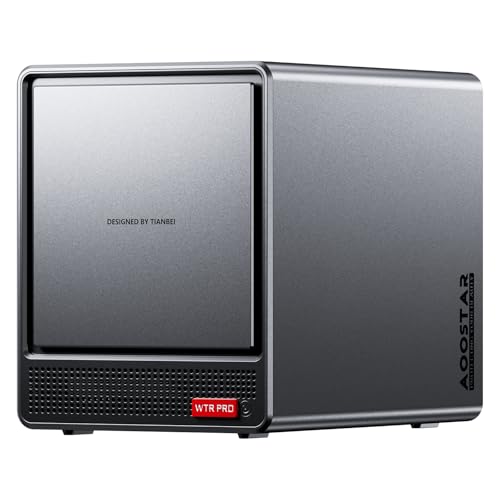
- Powerful AMD R7 5825U processor with 8 cores and 16 threads for multitasking and virtualization.
- Dual 2.5G LAN ports for fast network connectivity.
- Supports up to 96TB storage with 4 HDD bays and 2 M.2 slots, plus RAID configurations.
- All-metal chassis with effective cooling for stable operation.
- Broad OS compatibility including Proxmox, ESXi, Windows, and more.
Cons
- Requires separate purchase of RAM, storage, and operating system.
Best Mini Pc For Home Lab Buying Guide for 2026
Choosing the right best mini pc for home lab involves several important considerations. Below we break down the key factors to help you make an informed decision. We also provide a comparison table of the reviewed models.
Processor Performance and Core Count
The processor is the heart of your home lab. For tasks like virtualization, multiple cores and threads are crucial. The TK Node Mini PC offers AMD Ryzen R2314 (4C/4T) or R2514 (4C/8T) options, making it suitable for lightweight hypervisors. The Glorlin Mini PC features a Ryzen 7 6800H with 8 cores and 16 threads, ideal for demanding workloads. The BOSGAME E5 11 Pro uses a Ryzen 5300U (4C/8T) and the GMKtec G3S has an Intel N95 (4C/4T). Consider the number of virtual machines you plan to run and choose accordingly.
RAM Capacity and Upgradeability
Memory is another critical factor. Most home lab applications like Proxmox and Home Assistant benefit from at least 8GB of RAM, but 16GB or more is recommended for multiple VMs. The TK Node Mini PC comes with 16GB (upgradable to 32GB), while the Glorlin has 16GB LPDDR5 (soldered). The BOSGAME and GMKtec models start at 8GB but may have upgrade options. Always check if the RAM is soldered or socket-based if you plan to upgrade later.
Storage Options and Expansion
Storage speed and capacity affect VM performance and data storage. All reviewed models come with NVMe SSDs, but capacities vary: TK Node (256GB), Glorlin (512GB), BOSGAME (256GB), GMKtec (256GB). Some models offer dual M.2 slots for expansion. For home labs with large media libraries or multiple snapshots, consider models with larger or expandable storage.
Connectivity: USB, HDMI, and Networking
Home labs often require multiple network interfaces for routing, firewalling, or isolated networks. The Glorlin Mini PC features dual LAN, which is a huge plus. The TK Node and BOSGAME also offer dual LAN. The GMKtec G3S has a single LAN port. Also check USB ports for external drives or dongles. Triple display support (HDMI/DP/Type-C) on the Glorlin can be useful for monitoring multiple VMs.
Power Consumption and Thermal Management
Since home labs often run 24/7, power efficiency matters. The Intel N95 in the GMKtec G3S is known for low power draw, while the Ryzen 7 6800H in the Glorlin offers more performance at higher power. Quiet fans or passive cooling are also considerations if the mini PC will be in a living space.
Operating System and Virtualization Support
Most mini PCs support Windows, Linux, and popular hypervisors like Proxmox and ESXi. The TK Node Mini PC comes pre-installed with Proxmox VE, which is a huge time-saver for home lab enthusiasts. The Glorlin and BOSGAME are compatible with most operating systems. Always verify driver availability for your chosen OS.
| Model | Processor | RAM | Storage | Best For |
|---|---|---|---|---|
| TK Node Mini PC | AMD Ryzen R2314/R2514 or Intel i3-1215U | 16GB (up to 32GB) | 256GB NVMe | Proxmox, Home Assistant |
| Glorlin Mini PC Ryzen 7 6800H | AMD Ryzen 7 6800H (8C/16T) | 16GB LPDDR5 | 512GB NVMe | High-performance virtualization |
| BOSGAME E5 11 Pro | AMD Ryzen 5300U (4C/8T) | 8GB | 256GB NVMe | Budget home lab |
| GMKtec G3S | Intel N95 (4C/4T) | 8GB | 256GB NVMe | Low-power 24/7 operation |
Why You Should Trust Us
At MiniPCPicks, we are dedicated to providing objective, data-driven reviews. Our team analyzes product specifications, user feedback, and industry benchmarks to bring you accurate recommendations. We do not accept payment for positive reviews, and our affiliate partnerships do not influence our rankings. Each product in this guide was evaluated based on its suitability for home lab environments, considering factors like performance, expandability, and value. For more insights, you can read our best mini PCs under $500 guide.
We also cross-reference with community forums and expert opinions to ensure our picks align with real-world usage. Our goal is to help you make an informed purchase without marketing hype. If you have any questions, feel free to reach out to us.
Final Thoughts
After reviewing these 6 models, we have clear recommendations for different home lab needs. For the best overall experience, especially if you are diving into Proxmox and Home Assistant, the TK Node Mini PC stands out with its pre-installed virtualization environment and flexible processor options. It is a turnkey solution that saves setup time.
For those seeking maximum performance, the Glorlin Mini PC Ryzen 7 6800H offers high core count, fast RAM, and dual LAN, making it ideal for running multiple VMs or a media server. It is priced higher but delivers workstation-level performance in a compact form.
If budget is a primary concern, the BOSGAME E5 11 Pro provides solid entry-level performance for light home lab tasks, while the GMKtec G3S is perfect for low-power always-on applications like a home automation controller or lightweight file server. For more options in the budget segment, check out our best mini PCs under $200 roundup.
Frequently Asked Questions about Best Mini Pc For Home Lab
What is the best mini pc for home lab for 2026?
The best mini pc for home lab depends on your specific needs. For a balanced Proxmox setup, the TK Node Mini PC is our top pick. For high-performance tasks, the Glorlin with Ryzen 7 6800H is excellent. For budget-conscious users, the BOSGAME E5 11 Pro offers great value.
How much RAM do I need for a home lab mini PC?
For basic home lab tasks like file sharing or lightweight containers, 8GB may suffice. However, for running multiple VMs or memory-intensive applications like Home Assistant with many add-ons, 16GB or more is recommended. The TK Node Mini PC supports up to 32GB.
Can a mini PC run Proxmox and Home Assistant?
Yes, many mini PCs can run Proxmox VE and Home Assistant. The TK Node Mini PC even comes with Proxmox pre-installed. Ensure your chosen model has enough RAM and storage, and check for virtualization support in the BIOS.
What processor is best for home lab virtualization?
Processors with multiple cores and threads, like the AMD Ryzen 7 6800H (8C/16T) or Ryzen 5 5300U (4C/8T), are excellent for virtualization. Intel processors with VT-x support also work well. The TK Node offers both AMD and Intel options to suit your preference.
Are mini PCs power efficient for 24/7 operation?
Yes, mini PCs are generally very power efficient compared to traditional towers. Models like the GMKtec G3S with Intel N95 consume around 10-15W under load, making them ideal for always-on home lab use. The Glorlin with Ryzen 7 draws more power but still less than a full-sized desktop. For more energy-saving tips, see our budget mini PC category.